
Injibara Polytechnic College has submitted a practical research proposal to solve the problems noticed in the college in 2018 fiscal year, focusing on improving the efficiency and documentation quality of the registrar system across all departments through capacity building and ISO 21001-2018 standardized practices.
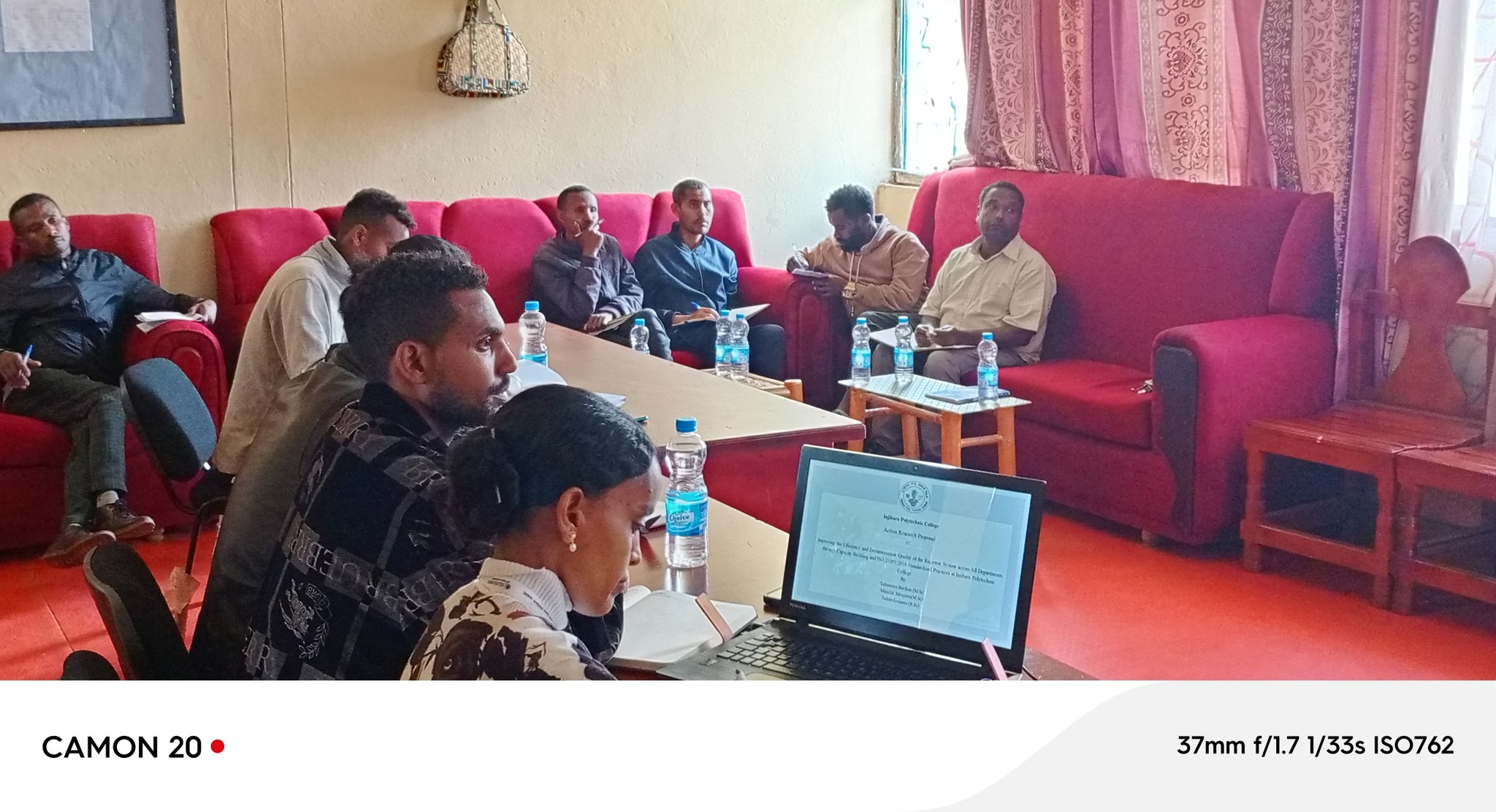
Research Approval and Team
The research proposal was officially approved by the college's research committee on November 07, 2018 E.C. The approval committee consisted of experienced instructors who recognized the potential impact of this practical research on improving institutional efficiency.

Provided expertise in educational management systems and quality assurance frameworks.

Contributed knowledge in administrative systems and process optimization.

Offered insights into technical education systems and institutional development.
Research Objectives
The practical research aims to address critical challenges in the registrar's office and documentation systems across all academic departments. The primary objectives include:
Key Research Goals
- Improve the efficiency of student registration processes across all departments
- Enhance documentation quality and standardization in academic records
- Implement capacity building programs for registrar office staff
- Establish ISO 21001-2018 compliant practices in educational management
- Reduce processing time for student records and academic documentation
- Create a unified digital documentation system accessible to all departments
- Develop standardized operating procedures for registrar functions
"The current registrar system faces challenges in documentation consistency and processing efficiency across different departments," noted one of the research committee members. "This practical research aims to create a unified, standardized approach that will benefit both students and administrative staff."
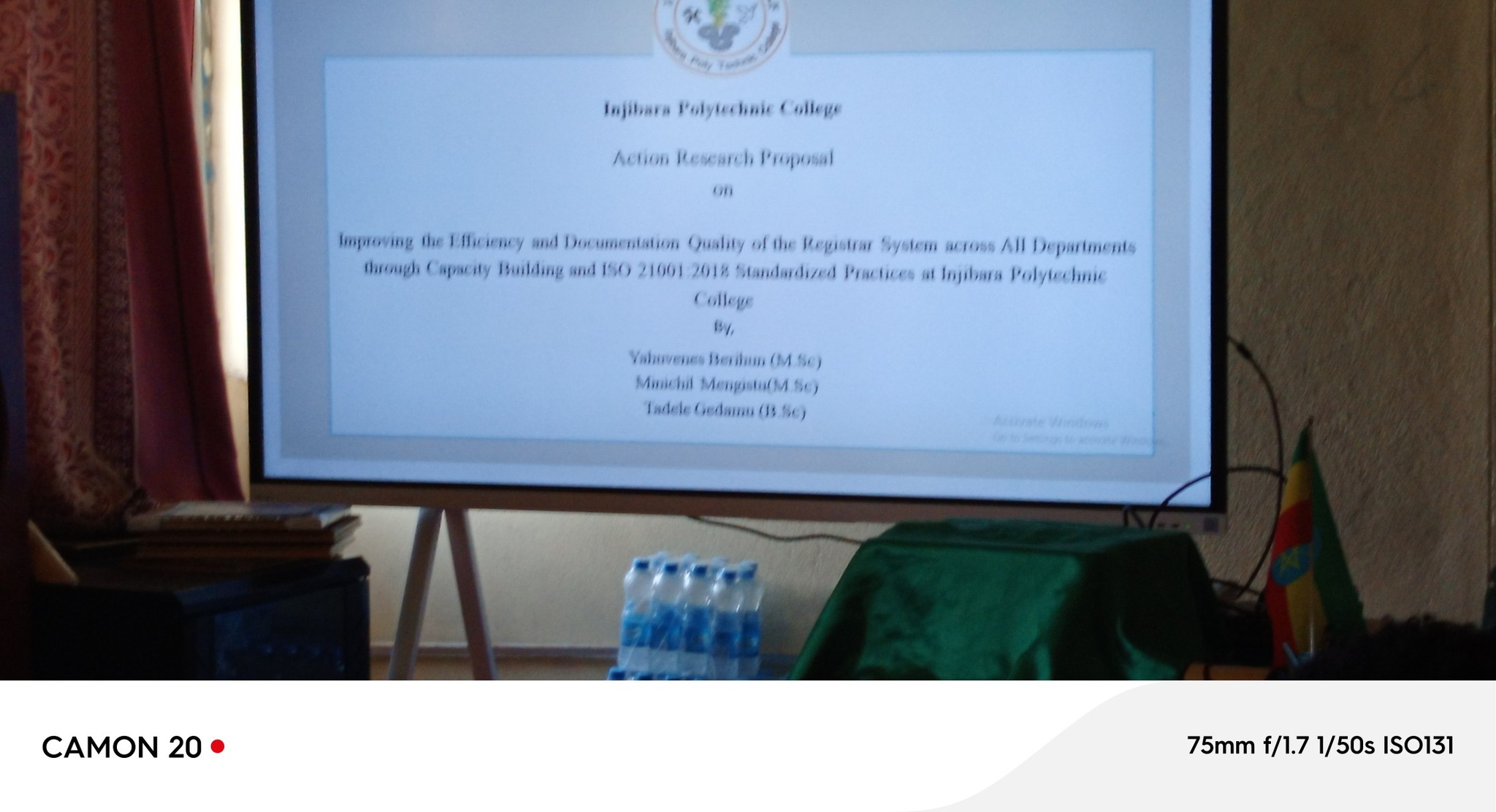
ISO 21001-2018 Standard Implementation
A significant component of this research involves implementing the ISO 21001-2018 standard, which specifies requirements for educational organizations management systems. This international standard provides a common framework for educational organizations to demonstrate their ability to support the acquisition and development of competence through teaching, learning or research.
The research will focus on adapting ISO 21001-2018 principles to the specific context of Injibara Polytechnic College, with particular emphasis on:
"Implementing ISO 21001-2018 will help us create a more responsive, effective, and learner-centered educational management system," explained a committee member. "This aligns perfectly with our college's mission of providing quality technical education."
Capacity Building Initiatives
The research includes comprehensive capacity building programs for registrar office staff and department administrators. These initiatives are designed to enhance skills in document management, data processing, and quality assurance practices.
Key capacity building components include:
- Training workshops on ISO 21001-2018 requirements and implementation
- Digital documentation and records management systems training
- Process optimization and workflow management sessions
- Quality assurance and continuous improvement methodologies
- Cross-departmental collaboration and communication strategies
The capacity building program will be rolled out in phases, beginning with the registrar's office and extending to all academic departments over the course of the research implementation.
Expected Outcomes and Impact
The research is expected to yield significant improvements in administrative efficiency and service quality. Key anticipated outcomes include:
"This research represents our commitment to continuous improvement and excellence in all aspects of our operations," stated a college administrator. "By enhancing our registrar systems, we're not just improving administrative efficiency - we're creating a better experience for our students and strengthening our institutional capacity."
The successful implementation of this research is expected to serve as a model for other technical and vocational education institutions in the region facing similar administrative challenges.


